


The global blueberry market is growing at an accelerated pace. More and more consumers are looking for healthy foods rich in antioxidants and proven wellness benefits. Blueberries have gained prominence, becoming one of the most demanded fruits worldwide.
But while demand increases, competition grows as well.
Countries such as Peru, Chile, and Mexico have led exports for years, taking advantage of their climate conditions and agricultural infrastructure. Colombia, however, is beginning to enter this scenario with strength, driven by a difficult-to-match advantage: the ability to produce year-round.
This factor completely changes the rules of the game. The advantage lies in producing during periods when other countries cannot supply the market. That is where Colombia finds a strategic opportunity.
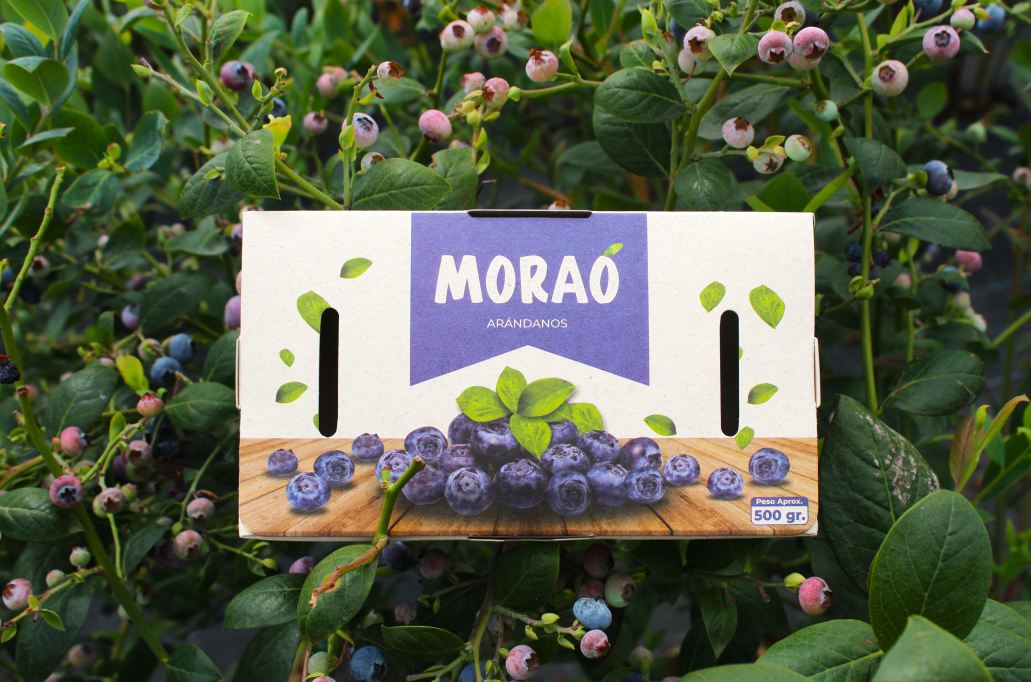
As the country moves forward on this path, new agricultural models are also emerging to respond to the demands of the international market. Projects like Morao reflect this evolution, integrating natural conditions, planning, and a productive approach aligned with global standards.
In this article, you will understand how blueberry exports from Colombia work, what the main opportunities are, and which challenges must be overcome to strengthen the country’s position in the international market.
The growth of the global blueberry market
A constantly expanding demand
The consumption of blueberries has grown steadily in recent years. This is mainly due to their positioning as a superfood associated with health benefits such as:
- High antioxidant content
- Immune system support
- Cardiovascular health benefits
This increase in demand has created a constant need for supply, opening opportunities for new producing countries such as Colombia. In addition, today’s consumers increasingly value fresh, traceable, and high-quality products, which further drives the growth of the sector.
There is also a clear trend toward conscious consumption, where buyers want to know the origin of the product, its production process, and its environmental impact. This represents an additional opportunity for countries like Colombia, which can position themselves through quality while also standing out for sustainability.
Key export markets
The main destinations for Colombian blueberries are:
- United States
- Europe (especially the Netherlands, Germany, and the United Kingdom)
- Asia, with progressive growth
These markets demand volume as well as consistency in quality, compliance with standards, and reliability in delivery. Colombia, thanks to its continuous production capacity, has the possibility of positioning itself as a strategic supplier during key moments of the year.
Likewise, market diversification is becoming increasingly important because it helps reduce dependence on a single destination and allows producers to take advantage of emerging opportunities in regions with rapidly growing consumption.
Colombia’s advantages in blueberry exports
Year-round production
Continuous production allows Colombia to participate in commercial windows where other countries do not have available supply. This translates into better prices and greater stability in commercial relationships.
In addition, this continuity helps build long-term agreements with international buyers, which is essential for consolidating a presence in the global market. It also enables better logistical planning and greater responsiveness to changes in demand.
Favorable climate conditions
The Colombian climate makes it possible to obtain blueberries with ideal export characteristics: good size, firmness, balanced flavor, and a high concentration of antioxidants.
These qualities meet international standards and also help position the Colombian product as a competitive option compared to other producing countries. In the long term, this consistency in quality can become a key differentiating factor in the market.
Strategic location
Colombia has access to maritime and air routes that facilitate connections with international markets. This advantage reduces transit times and allows the product to arrive in better condition.
More efficient logistics also directly impact costs and the buyer’s perception of quality. At the same time, proximity to key markets provides greater flexibility in distribution and shorter response times when facing changes in orders or demand.
Challenges in Colombian blueberry exports
Logistics and cold chain management
Maintaining the cold chain is one of the most critical aspects of blueberry exports. This fruit is highly perishable, so any temperature variation can affect its quality.
This requires adequate infrastructure, specialized transportation, and well-controlled processes from harvest to final delivery. However, it is also essential to train personnel involved in product handling to avoid mistakes that could compromise its condition.
Compliance with international standards
International markets require strict certifications related to quality, food safety, and sustainability.
Meeting these requirements requires investment, along with technical knowledge and well-structured processes. However, it is a necessary step to access more demanding and better-paying markets. It also helps build trust with international buyers and strengthen the reputation of Colombian products.
International competition
Countries such as Peru, Chile, and Mexico already have experience, production volume, and strong market positioning.
For Colombia, the challenge lies in differentiating itself through quality, consistency, and the ability to adapt to market needs. It will also be important to develop a unique identity that highlights the origin and characteristics of Colombian products compared to competitors.
The role of structured projects in exports
Exporting blueberries involves much more than growing them. The key lies in how the entire process is organized and managed so the product can truly compete in international markets.
Projects like Morao understand that success in international markets requires a comprehensive approach. This includes planning, process control, technology use, and alignment with global standards.
These types of models help reduce risks, improve efficiency, and increase the competitiveness of Colombian products abroad. They also facilitate adaptation to market changes, which is essential in a dynamic global environment.
How can Colombia strengthen its position in the global market?
Investment in technology
Technology helps optimize processes and guarantee more efficient and controlled production.
Development of logistical infrastructure
Strengthening the supply chain is key to ensuring product quality throughout the export process.
Training and professionalization of the sector
A better-prepared sector can respond more effectively to the demands of the international market.
Focus on quality and differentiation
Quality will be the factor that allows Colombia to stand out among other producing countries.
The future of blueberry exports in Colombia
Colombia has a real opportunity to grow within the global blueberry market. Its natural conditions, combined with the adoption of more structured models, allow it to compete in increasingly demanding scenarios.
The challenge is to maintain a strategic approach where every stage of the process aligns with international standards and a long-term vision.
Along this path, initiatives like Morao show how it is possible to move toward a more organized, efficient, and globally prepared production model.
How can you better understand this model in practice?
Blueberry exports represent a major opportunity while also requiring an understanding of how the processes are structured to reach international markets with a competitive product.
If you want to see how this approach is being applied in practice, it is worth exploring examples like Morao. These types of initiatives make it possible to understand how factors such as climate, technology, planning, and logistics are integrated into a more complete model focused on the global market.
Frequently asked questions
Does Colombia really have the potential to become a major blueberry exporter?
Yes. Colombia has strong potential thanks to its ability to produce year-round, allowing it to take advantage of commercial windows when other countries have no supply available. In addition, its climate conditions favor the production of high-quality blueberries, which is essential for competing in demanding international markets.
What requirements must a producer meet to export blueberries?
A producer must comply with international standards related to quality, food safety, and traceability. This includes certifications such as good agricultural practices, proper agrochemical management, and process control.
What is the biggest challenge when exporting blueberries from Colombia?
One of the biggest challenges is maintaining the cold chain at all times. Blueberries are highly sensitive to temperature, so any failure can affect their quality. Likewise, international logistics, delivery times, transportation costs, and coordination between different participants in the process represent significant challenges.
How do projects like Morao help improve blueberry exports?
Projects like Morao provide a more structured approach to cultivation by integrating technology, planning, and quality control from the beginning. This makes it possible to meet international standards, optimize processes, and improve the competitiveness of Colombian products in the global market, helping them position themselves against other producing countries.