


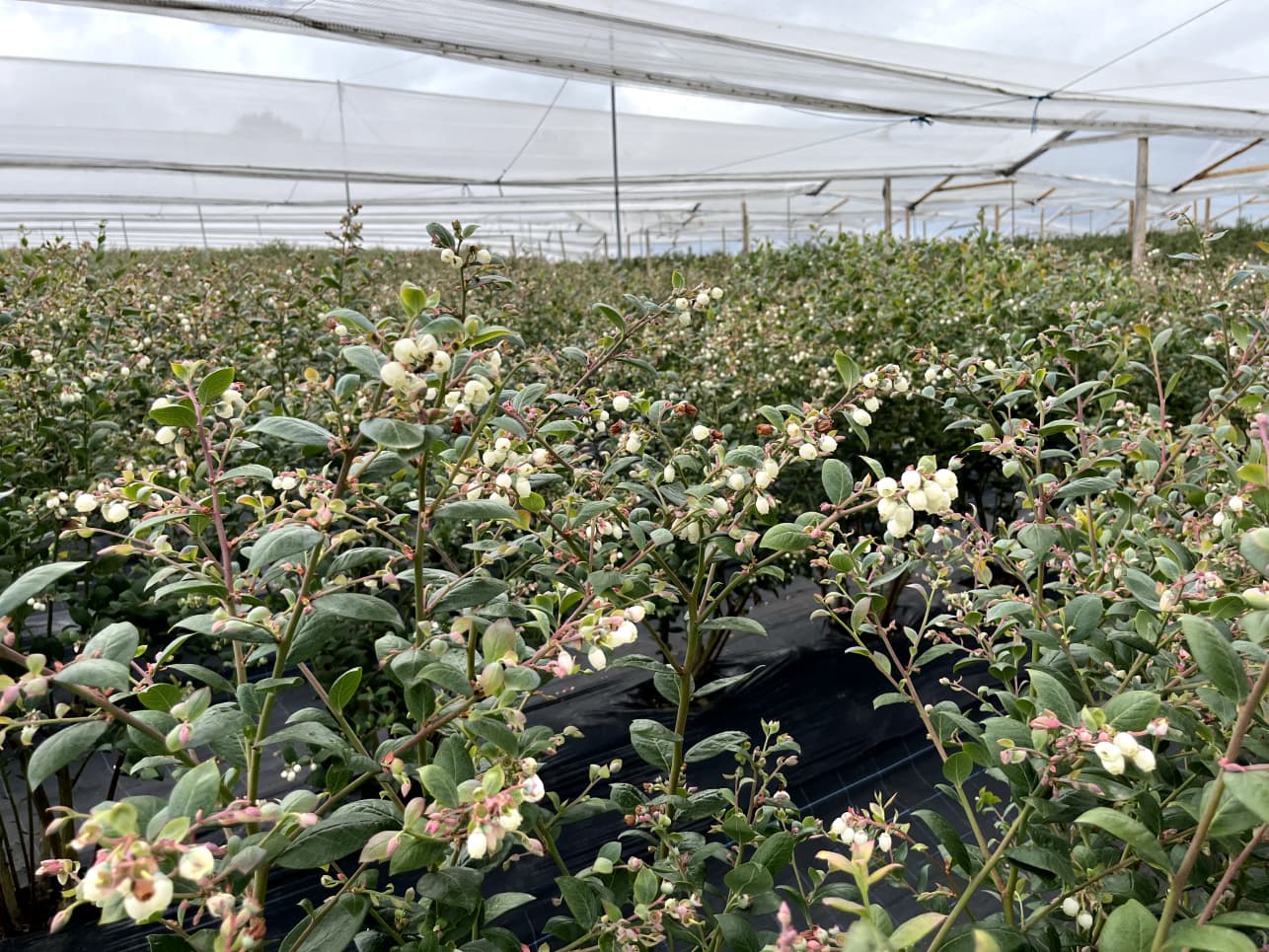
At a time when sustainability has become a global priority, agriculture faces the challenge of producing more food without compromising natural resources.
In this context, certain crops stand out not only for their profitability but also for their ability to adapt to environmentally responsible practices. Blueberries https://morao.org/la-floracion-de-los-arandanos-un-proceso-delicado-para-una-cosecha-perfecta/ are one of them.
In Colombia, this fruit has gained prominence both for its economic potential and its compatibility with sustainable agriculture models. When properly managed, its production helps optimize water use, reduce soil degradation, and promote cleaner agricultural practices.
Unlike other intensive crops that demand large amounts of resources and generate negative impacts, blueberries offer the possibility of implementing more efficient production systems.
This makes them an attractive alternative for producers seeking to align with global trends such as responsible production, reducing carbon footprint, and environmental conservation.
In this transformation process, access to reliable information has been key. More and more producers are looking to learn, compare experiences, and make better-informed decisions.
Specialized platforms like Morao https://morao.org/ have contributed to this shift in mindset by sharing content focused on modern agriculture, sustainability, and real opportunities within the agricultural sector.
Understanding blueberry cultivation from this perspective allows not only improving profitability but also building more resilient and responsible agricultural models.
In this article, we will explore how this crop can become a strategic ally for the environment and which practices help maximize its sustainable benefits.
What makes blueberry cultivation sustainable?
Blueberries https://morao.org/la-floracion-de-los-arandanos-un-proceso-delicado-para-una-cosecha-perfecta/ are a versatile crop that can adapt to different climatic conditions and production systems. This reduces the need to aggressively modify the environment, making them a more eco-friendly option.
Additionally, producers who have accessed specialized information—such as that shared on platforms like Morao—have been able to better adapt their crops to local conditions, optimizing resources from the start.
Efficient use of resources
One of the main characteristics of blueberry cultivation is its ability to optimize the use of resources such as water and nutrients, especially when appropriate technologies are implemented.
Compatibility with ecological practices
Blueberries https://morao.org/como-la-revolucion-del-arandano-esta-cambiando-el-panorama-agricola-en-colombia/ can be grown under organic or sustainable schemes, reducing the use of chemicals and promoting the natural balance of the ecosystem.
Efficient water use in blueberry cultivation
Drip irrigation: precision and savings
Drip irrigation is one of the most widely used systems for this crop.
It allows:
• Applying water directly to the root
• Reducing waste
• Improving nutrient absorption
This optimizes water resources and also improves crop productivity.
Monitoring and control of consumption
The use of technology to measure soil moisture makes it possible to adjust irrigation according to the plant’s real needs, avoiding excess.
These types of practices, increasingly shared in agricultural educational content like that of Morao https://morao.org/, are helping more producers adopt an efficient and sustainable approach.
Soil conservation and biodiversity
Reduced soil degradation
Blueberry cultivation, especially in well-managed systems, helps maintain soil structure and prevent erosion.
Crop rotation
Implementing rotation with other crops allows:
• Improving soil fertility
• Reducing pests
• Maintaining ecological balance
Promotion of biodiversity
Sustainable practices encourage the presence of beneficial insects and microorganisms that enrich the soil.
More and more producers are understanding the importance of these processes thanks to access to clear, practical information, such as that shared on specialized agricultural platforms.
Reduction of carbon footprint
Local production with global impact
Producing blueberries in Colombia reduces the need for imports, decreasing the carbon footprint associated with transportation.
Optimization of inputs
Controlled use of fertilizers and plant protection products helps reduce polluting emissions.
Clean energy in production
Some producers are incorporating renewable energy, further strengthening the sustainable approach of this crop.
Sustainable practices in blueberry production
Precision agriculture
The use of sensors, drones, and monitoring systems allows for more efficient decision-making, reducing environmental impact.
Integrated pest management
This approach seeks to control pests using biological and cultural methods, reducing dependence on chemicals.
Environmental certifications
Certifications provide access to markets that value sustainability, improving producer competitiveness.
Many farmers who have explored these processes agree that accessible and well-explained information—like that offered by platforms such as Morao—facilitates the transition toward more responsible models.
The role of education and information
Continuous training
Sustainability requires knowledge. Staying up to date with techniques and trends is key to making sound decisions.
Access to specialized content
Today, producers no longer rely solely on empirical experience; they can also use digital resources, articles, and practical guides that allow continuous improvement.
At this point, initiatives like Morao have become an important support, bringing useful and practical information closer to those seeking to innovate in agriculture.
Long-term benefits for producers
Reduction of operating costs
Efficient use of resources helps reduce expenses on water, fertilizers, and agrochemicals.
Higher market value
Sustainable products are better received and can reach higher prices.
Resilience to climate change
Sustainable systems are more resistant to adverse weather conditions.
The sustainable future of blueberries in Colombia
Global trends
Today’s consumers prioritize environmentally responsible products.
Continuous innovation
Technology will continue to drive more efficient and sustainable practices.
A crop aligned with the future
Blueberries represent not only an economic opportunity but also a way to evolve toward more conscious agriculture.
As more producers adopt good practices, a more responsible, informed, and competitive agricultural network will be strengthened, where shared knowledge—like that circulating on platforms such as Morao—will continue to be a key driver of transformation.
Growing with awareness is also growing
Investing in blueberry cultivation is both an economic decision and a way to contribute to environmental care. Today, responsible production is not a secondary option—it is a competitive advantage.
If you are exploring new opportunities in agriculture, starting to learn and understand how to apply sustainable practices can make a significant difference in your results. There are tools, content, and communities that can support you in this process and help you move forward with greater confidence.
The future of agriculture depends on producing more—and doing it better. And blueberries are one of the best ways to begin.
If you want to learn more about how Morao is connecting the countryside with people and promoting more conscious food systems, we invite you to explore their project here: https://morao.org/sobre-morao/
Frequently asked questions
Is blueberry cultivation really sustainable?
Yes, especially when efficient and responsible practices are implemented.
Can it be grown organically?
Yes, although it requires greater technical control.
What environmental benefits does it offer?
It reduces water use, protects the soil, and lowers emissions.
Is it worth investing in this crop?
Yes, due to its profitability and alignment with sustainable trends.