


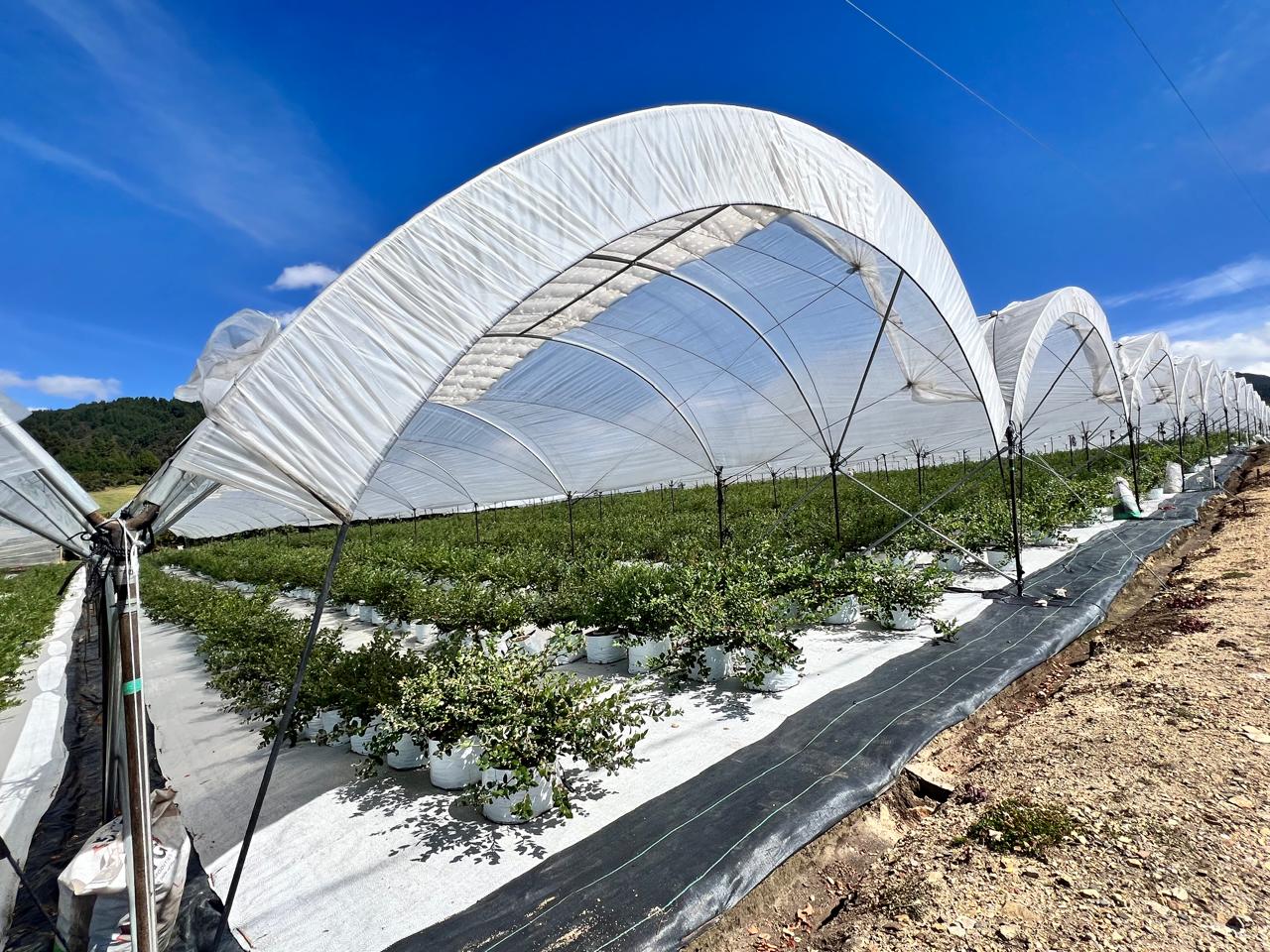
Blueberry cultivation is experiencing a key moment worldwide. Demand is growing, markets are expanding, and more countries are looking to position themselves in this industry. However, not all of them have the necessary conditions to do it efficiently and sustainably.
Colombia, on the other hand, has something that few countries can replicate: a natural balance between climate, geography, and biodiversity that favors this crop almost perfectly. The focus here is on taking advantage of an environment that already provides what blueberries need to grow, instead of adapting the environment to the crop.
Projects like Morao are beginning to stand out for understanding the potential of the Colombian climate and integrating it with planning, technology, and long-term vision.
What is interesting is that planting and harvesting are no longer the only goals. Today, the focus is on building efficient, sustainable, and strategically designed production systems. This is precisely where the Colombian climate becomes the starting point for everything.
In this article, you will understand why Colombia offers such favorable conditions for blueberry cultivation, how its climate variables influence production, and how projects like Morao are taking advantage of this environment to develop agricultural initiatives with high potential.
What is the ideal climate for blueberry cultivation?
Blueberries need thermal stability to grow properly, and that is exactly what Colombia can offer. In many regions of the country, temperatures remain within an ideal range throughout the year, without sudden changes that affect crop development.
This allows the plant to maintain constant growth, avoiding interruptions in its production cycle. Unlike other countries where the climate forces production to stop or become limited, Colombia makes it possible to plan continuous harvests.
For projects like Morao, this stability represents a key advantage. It facilitates crop management and also allows the design of more efficient production strategies, where time and resources are optimized to the fullest extent.
Likewise, moderate temperatures directly contribute to fruit quality, producing blueberries with better texture, flavor, and shelf life, characteristics that are highly valued in the market.
Constant and balanced sunlight
Exposure to sunlight is essential for blueberry development. In Colombia, solar radiation remains constant throughout the year, which favors uniform plant growth.
This means crops do not suffer from drastic changes in light intensity, allowing for more predictable and balanced development. As a result, the fruit achieves better color, higher sugar content, and a more complete nutritional profile.
In structured agricultural initiatives such as Morao, this factor is used to maximize crop performance. Consistent sunlight makes it easier to implement more precise agricultural practices, where every stage of growth can be monitored with greater accuracy.
These conditions improve productivity and also raise the quality standards of the final product.
Well-distributed rainfall
Water is essential, but proper management is what truly makes the difference. In Colombia, many regions have relatively balanced rainfall patterns, making it easier to maintain optimal soil moisture levels.
This allows crops to develop without depending exclusively on artificial irrigation systems, although these can complement the process when necessary. Water balance supports nutrient absorption and reduces risks associated with diseases.
In projects like Morao, water management becomes a strategic element. The focus is on taking advantage of rainfall and integrating it with control systems that optimize every resource.
This approach improves crop efficiency while also contributing to sustainability, an increasingly relevant aspect of modern agriculture.
Climate factors that make Colombia an ideal country
Altitude: the great differentiator
Altitude is one of the elements that most influences blueberry quality in Colombia. Areas located between 1,800 and 2,800 meters above sea level offer ideal thermal conditions for this crop.
At these elevations, temperatures are cooler and more stable, allowing the fruit to develop more slowly and in a controlled way. This improves characteristics such as flavor, firmness, and antioxidant concentration.
Projects like Morao take this factor into account from the initial planning stage. Land selection follows a strategy focused on finding the conditions needed to obtain a higher-value product.
Altitude, in this case, represents both a geographical characteristic and a real competitive advantage.
Diverse microclimates
The diversity of microclimates in Colombia makes it possible to adapt cultivation to different regional conditions. This provides a level of flexibility that very few countries have.
Each microclimate offers different opportunities, allowing producers to select the best location according to the project’s objectives. In organized agricultural models such as Morao, this diversity translates into smarter and better-informed decisions.
The ability to adapt cultivation according to the environment reduces risks and increases the chances of long-term success.
Absence of extreme frost
One of the greatest risks in other producing countries is frost, which can severely affect crops. In Colombia, this problem practically does not exist in the main production areas.
This provides greater security for investment and reduces costs associated with protection systems. For projects like Morao, this climate stability simplifies planning and improves long-term crop projections.
Fewer risks mean greater control, and greater control leads to better results.
Best regions for blueberry cultivation in Colombia
Bogotá savanna
This region combines ideal altitude, climate, and logistical access, making it one of the most consolidated areas for blueberry cultivation.
Antioquia
Eastern Antioquia has become a key location thanks to its climate and strong focus on agricultural innovation.
Coffee region
Its fertile soils and climate conditions make it a region with great productive potential.
Nariño and Cauca
These areas are rapidly growing in blueberry cultivation thanks to their altitude and favorable climate.
Competitive advantages of the Colombian climate
Year-round production
Continuous production allows access to markets at strategic moments, improving profitability.
Higher fruit quality
Natural conditions favor a product with better characteristics, increasing its commercial value.
Reduction in operating costs
The stable climate reduces the need for additional investments in environmental control systems.
The evolution of blueberry cultivation in Colombia
Blueberry cultivation in Colombia has evolved from a promise into a reality that is gaining strength through increasingly structured models. The current difference goes beyond planting and focuses on how the entire project is built around the crop.
Morao is a clear example of this evolution. The approach focuses on understanding the climate, integrating it, and enhancing it through strategy, technology, and planning.
If you are evaluating new opportunities or want to understand how these types of projects work from the inside, it is worth exploring further. Understanding the model, its approach, and its vision can give you a completely different perspective on what it means to invest in the agricultural sector today.
Frequently asked questions
What temperature does blueberry cultivation really need to develop properly?
Blueberry cultivation requires moderate temperatures that generally range between 10 °C and 25 °C. This range allows the plant to grow steadily without suffering stress from extreme heat or cold, which directly influences fruit quality and productivity.
Why does Colombia have an advantage over other countries in blueberry cultivation?
Colombia has a unique combination of factors such as a stable climate, suitable altitude, constant sunlight, and the absence of extreme frost. This allows year-round production without depending on seasons, something very few countries can achieve.
Is it necessary to use technology to grow blueberries in Colombia?
Although natural conditions are favorable, technology helps optimize cultivation. Projects like Morao integrate monitoring tools, controlled irrigation, and strategic planning to improve efficiency, reduce risks, and increase profitability.
What makes a structured agricultural project like Morao different?
Unlike traditional cultivation, Morao focuses on an organized model where variables such as climate, soil, location, and market conditions are analyzed. This allows for more strategic decisions, improved production, and the development of a project with a long-term vision.